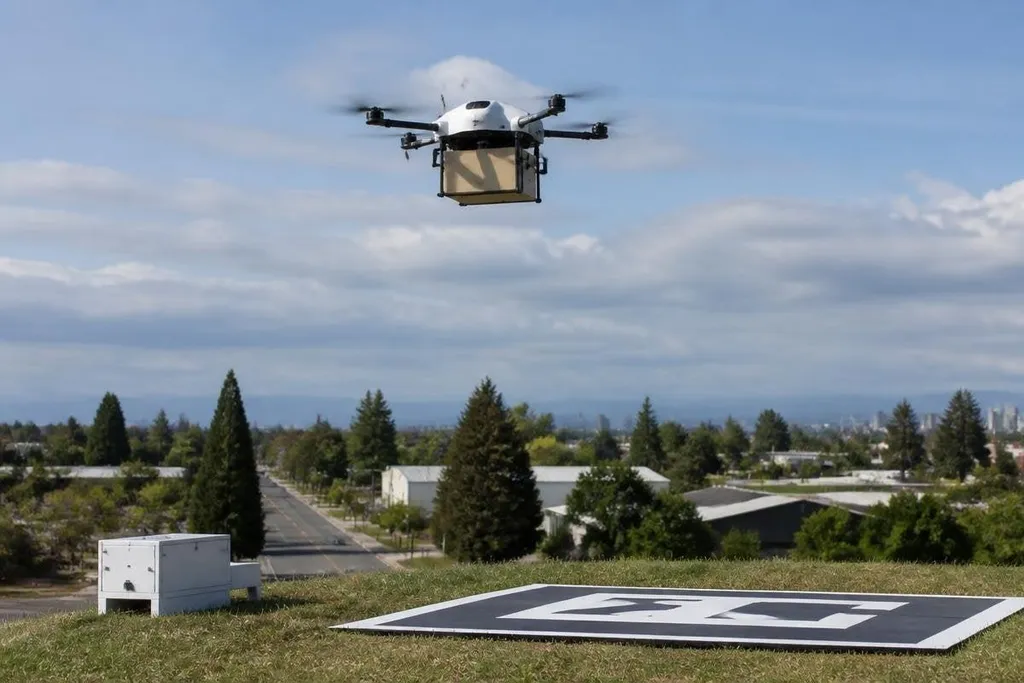
A delivery drone can move a small parcel from a local site to a drop point without using the road between them. That changes the delivery problem from a long vehicle trip into a short flight with strict limits on weight, weather, airspace, and landing space.
For an operations manager, the question is practical: where can a drone remove a slow road leg without creating a harder safety problem?
- Drones work best on small, repeatable routes with few safe landing points.
- Their value comes from avoiding road distance, not from carrying large loads.
- Weather, local aviation rules, battery use, and handoff safety still set the limits.
The road is the part drones can skip
A van must follow streets, wait at signals, and reach each stop through the road network. A drone follows a planned air route, so the distance between the dispatch site and the customer can be shorter even when the roads are busy or indirect.
That matters most for urgent, small items. A medical sample, replacement part, or lightweight household order may need speed more than cargo space. The drone does not replace a full delivery vehicle in that case; it handles one part of the route.
This split can also change where stock sits. A company may keep small items at a local site and send them by air when a road trip would take too long. The value depends on the whole process, including packing, loading, flight checks, and the final handoff.
How the flight works
A delivery drone needs more than motors and a battery. Its flight computer follows a route, while GPS and other sensors help it estimate position. Cameras or obstacle sensors can help it react to objects near the flight path, though the exact sensor set differs by model.
At the destination, the drone needs a safe way to place the parcel. It may land, lower the package on a cable, or use a marked drop area. Each method changes the work on the ground. A cable drop avoids landing on uneven ground, but it still needs a clear space and a way to confirm that the package reached the right place.
The handoff is where an otherwise good flight can fail. A customer may not be home, a dog may enter the drop area, or a tree may block the planned descent. A useful system needs a second plan, such as returning to base or sending the parcel to a staffed pickup point.
Why the limits matter
Small batteries limit flight time and payload. Carrying a heavier parcel uses more power, while wind forces the motors to work harder. The drone also needs energy for the return trip, not only the outward flight.
Weather adds another limit. Rain, ice, strong wind, and poor visibility can affect lift, sensors, or the package itself. A route that works on a calm day may need a different plan when conditions change.
Rules matter too. Local aviation requirements can set limits on where drones fly, how operators monitor them, and how they handle people or buildings below. A company must check those rules before it treats a route as routine.
A delivery route depends on more than airspace rules. Delivery drone reporting from Robot24.com can connect an aircraft’s range, payload, route, test date, and operator role to the ground process that receives each package. That gives the next section a practical starting point: where do drones fit best?
Where drones fit best
The strongest use case has four traits: a small parcel, a repeatable route, a clear drop area, and a road trip that costs time. Remote sites, campuses, medical facilities, and spread-out properties may fit that pattern, but each site needs its own flight and safety review.
A drone is a poor fit when the parcel is heavy, the destination has no safe drop point, or the route crosses places where local rules make regular flights hard to run. I’d skip a drone program if the team has not measured the full handoff process, because a short flight can still leave the slowest work untouched.
A practical go or pause check
Use this check before planning a route:
- Parcel weight: Confirm the packed weight, shape, and balance against the aircraft’s stated payload.
- Route safety: Map people, buildings, trees, power lines, and places where the drone may need to stop.
- Weather limits: Set clear rules for wind, rain, visibility, and battery reserve.
- Drop method: Test how the parcel reaches the customer and what happens when nobody can receive it.
- Legal review: Check local aviation rules, operator duties, and limits near roads or buildings.
- Fallback plan: Keep a van, pickup point, or return route ready for failed flights.
The case for delivery drones will grow where these checks produce a repeatable route and a clear saving in road time.
The next proof point is whether packing, loading, flight checks, and the final handoff work safely on ordinary days.